
Postpartum Lifting: How To Know You’re Ready for Real Strength Training Again
.png)
After giving birth, many women are eager to return to strength training but aren’t sure when or how to start safely. It can be confusing to know what your body is truly ready for. You may feel strong one day and completely unstable the next, or you might notice lingering core weakness, back pain, or pressure “down there” when lifting heavier weights.
This is your body’s way of asking for a progressive, strategic rebuild before you jump back into intense workouts. The truth is, postpartum lifting is not just about strength. It is about retraining your system from the inside out, breath, core, pelvic floor, posture, and then load.
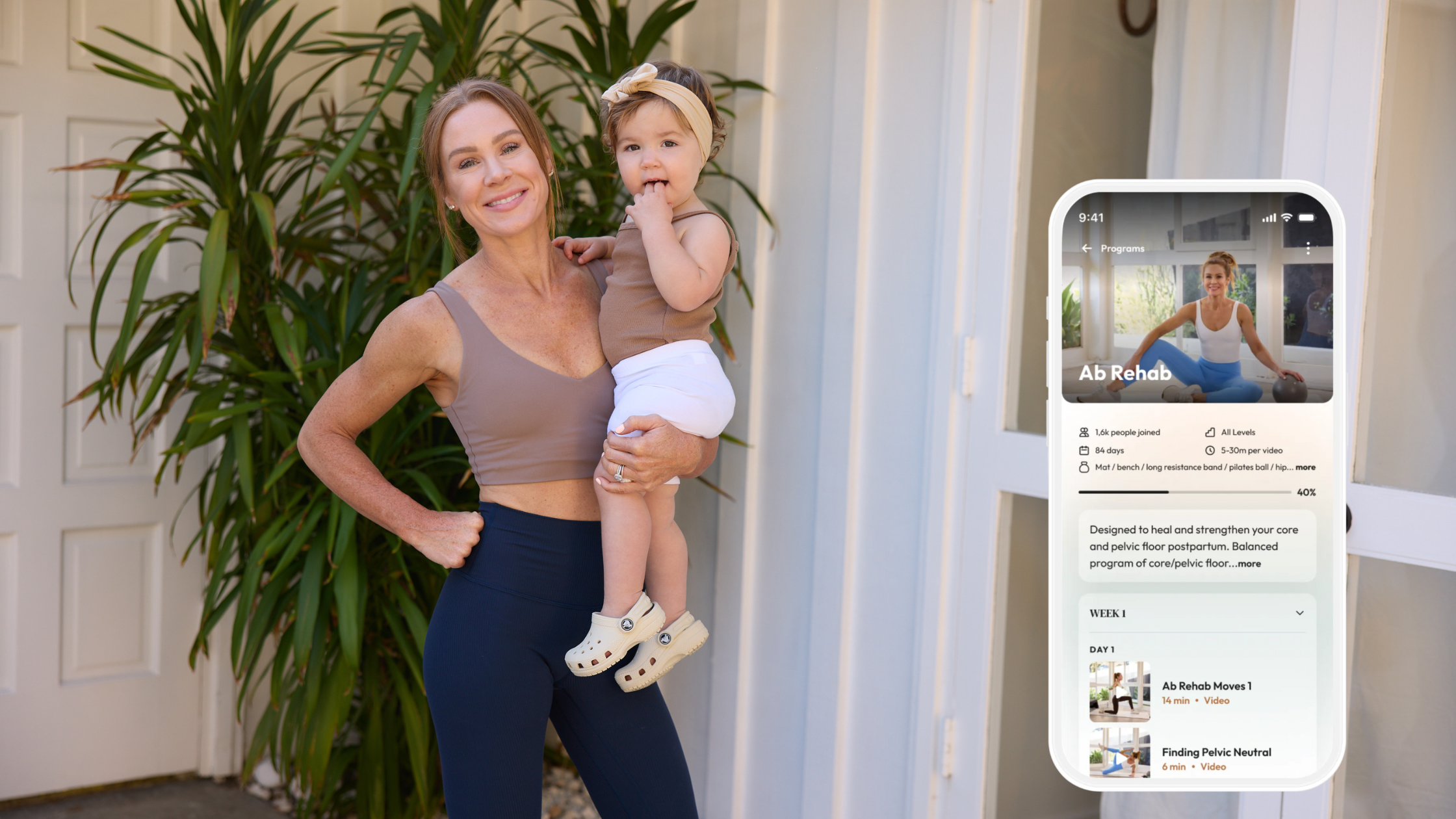
Inside Ab Rehab and C-Section Recovery, we teach a step-by-step return-to-strength system that ensures your foundation is ready before you lift heavier.
Why Postpartum Weight Lifting Is Different
During pregnancy, your body undergoes major structural changes. The abdominal wall stretches, the ribcage expands, and ligaments loosen due to hormonal shifts. Even if you trained throughout pregnancy, those adaptations affect your alignment and how your core manages pressure.
Traditional strength training often skips the retraining phase that postpartum bodies need. Jumping into squats, deadlifts, or presses too soon can lead to:
- Core doming or coning from unmanaged pressure
- Pelvic heaviness or leakage
- Back or hip pain
- Slow progress or re-injury
The goal of postpartum lifting is not to hold you back. It is to rebuild your strength with precision so that when you do lift heavy, your body can handle it safely and powerfully.
The Foundation Comes First
Before adding load, you need to reestablish core and pelvic floor coordination, breathing mechanics, and postural control.
Step 1: Reconnect Breath and Core
Start with diaphragmatic breathing, which re-trains your body to manage pressure correctly.
- Inhale through your nose, expanding your ribs, belly, and back.
- Exhale gently, feeling your deep core (transverse abdominis) and pelvic floor activate together.
This restores the mind-body connection between your breath and your stabilizing muscles.
.png)
Step 2: Realign Posture
Pregnancy shifts your center of gravity forward, often creating anterior pelvic tilt or flared ribs.
- Focus on stacking your ribs over your pelvis.
- Keep a soft bend in your knees and engage your glutes lightly.
Posture impacts how your core fires and how effectively your body can transfer load through movement.
.png)
Step 3: Retrain Movement Patterns
Before lifting heavy, revisit basic movement patterns like squats, hip hinges, lunges, and rows. In Ab Rehab, we rebuild these patterns with core engagement cues so every rep strengthens your foundation instead of stressing it.
%20copy.png)
Signs You’re Ready for Postpartum Strength Training
Every woman’s timeline is different, but here are signs that your body is ready for more advanced lifting:
- You can breathe and brace without bulging or signs of intolerance in desired movement.
When exhaling during effort, your abs should flatten and stay controlled. If you see coning or doming down the midline, your core is not yet managing pressure efficiently in that position or exercise. - You can activate your deep core muscles.
Place a hand on your lower belly and feel for a gentle tension when you exhale. This indicates your transverse abdominis is engaging correctly. - You can complete daily tasks without pain.
Activities like carrying your baby, lifting a car seat, or pushing a stroller should feel stable and supported. - No leaking or pelvic pressure.
If you feel heaviness, pressure, or urinary leakage during movement, your pelvic floor needs more support before heavy lifting. - You’ve rebuilt baseline strength through core and mobility work.
Completing a structured program like Ab Rehab provides the necessary foundation before moving into loaded strength cycles.
The Phases of Postpartum Strength Training
Phase 1: Postpartum Core Connection & Body Awareness
Focus on reconnecting to your deep core, breath, and posture. Work on gentle mobility and basic strength moves like bridges, bird dogs, and heel slides.
Phase 2: Postpartum Functional Movement & Stability
Progress to functional strength patterns with light resistance. Exercises like goblet squats, split squats, and resistance band pulls help improve control and stability.
Phase 3: Postpartum Strength Building
Begin adding progressive overload, gradually increasing weights, reps, or time under tension. Maintain form and control throughout each lift.
Phase 4: Return to Power & Performance Postpartum
Once your foundation is solid, you can reintroduce plyometrics, Olympic lifts, or high-intensity intervals. This stage is about performance, not just recovery.
In Ab Rehab, we use this phased approach to rebuild the entire system, not just the muscles.
%20copy%202.png)
Common Mistakes to Avoid
- Skipping the rebuild phase. Jumping into heavy lifting too early can cause setbacks.
- Bracing too hard. Over-gripping your abs increases intra-abdominal pressure and can worsen diastasis or pelvic symptoms.
- Neglecting breath. Breath control is what makes postpartum strength training sustainable.
- Ignoring posture. Your form matters more than the weight on the bar.
Research on Postpartum Strength Training
Recent studies have shown that progressive resistance training in postpartum women significantly improves core strength, functional capacity, and quality of life.
- A 2021 study in Women’s Health Reports found that resistance training improved trunk stability and reduced back pain in postpartum participants within 8 weeks.
- Another study in Physical Therapy in Women’s Health Journal confirmed that retraining breathing patterns before resistance loading enhanced pelvic floor support and decreased incontinence rates.
These findings reinforce what we see every day in our postpartum programs, when postpartum women train intentionally, they build strength that lasts.
%20copy%203.png)
How to Transition into Lifting
If you’re completing Ab Rehab or C-Section Recovery, you’re already halfway there. Once you’ve built deep core strength and regained full mobility, you can safely layer strength training on top.
Start with this strength training plan postpartum:
- 2–3 days a week of total-body lifting
- Moderate resistance where you can complete 8–12 controlled reps
- Focus on slow, controlled eccentrics (lowering phase)
- Prioritize breath and posture over intensity
If you are ready to transition from healing to real strength, Ab Rehab bridges the gap between recovery and performance. It lays the foundation your body needs for safe, powerful postpartum lifting.
For C-section moms, pairing C-Section Recovery with strength training ensures your core, fascia, and scar tissue are ready for load, helping you lift without restriction or pain.
Your strength journey does not end with recovery, it begins there.
Find your
perfect plan


