
Pregnancy Workout Plan: A Safe Weekly Schedule for Every Trimester
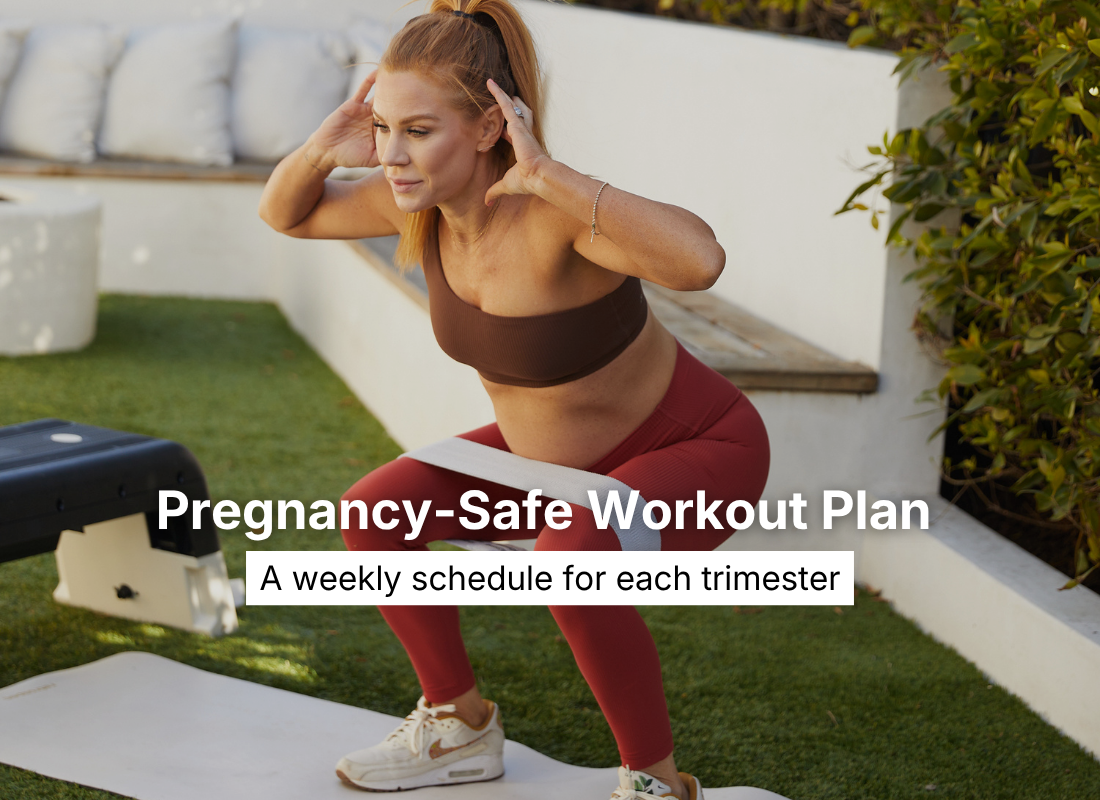
The best pregnancy workout plan is one you can actually stick to: about 150 minutes of moderate activity a week, mixing strength training, low-impact cardio, and core and pelvic floor work, adjusted as your body changes. That's the guideline from ACOG (the American College of Obstetricians and Gynecologists), and it's what this plan is built on.
Below is a sample week you can start today, how to adjust it in each trimester, and the moves to modify along the way. Always check with your OB or midwife before starting or changing your exercise routine in pregnancy. This matters most if you have placenta previa, preeclampsia, a short cervix, or have been told you're at risk of preterm labor.
Sample weekly pregnancy workout plan
- Monday (30-60min): Full-body strength + optional cardio
- Tuesday (25–30 min): Breath work + Glute focused strength
- Wednesday (15–35 min): Core and pelvic floor + cardio
- Thursday (30 min): Rest day
- Friday (25–30 min): Full body strength
- Saturday (15–35 min): Core and pelvic floor + cardio
- Sunday: Rest, mobility, or an easy walk
That adds up to anywhere from about 140-160 minutes per week. On a low-energy day, a 10-minute walk or some breath work and mobility still counts. Consistency beats intensity in pregnancy.
How hard should it feel? Depends on the workout. Some sessions are meant to push you (within safe limits), others are meant to keep you calm.
Why this mix works
- Strength training supports your joints as pregnancy hormones loosen your ligaments, builds the strength you'll need to carry a baby (and a car seat), and helps with aches like low back pain. See Strength Training During Pregnancy: How to Do It Safely.
- Low-impact cardio supports your energy, mood, sleep and heart health.
- Core and pelvic floor work helps you manage pressure as your belly grows, which can reduce pain, lower your risk of severe diastasis recti and pelvic floor problems, and helps you prepare for birth.
- Mobility and recovery keeps your hips and upper back moving as your posture shifts. This helps minimize aches & pains as your body changes and pressure increases.
How to adjust the plan each trimester
First trimester (weeks 1–13)
Fatigue and nausea are real. Keep the structure but shorten the sessions when you need to. If you were already active, you can usually keep doing what you were doing and adjust on low-energy days. Build in intentional posture and glute strength work too, which supports your back and pelvis as your bump grows. Now is a great time to learn 360° diaphragmatic breathing: inhale to let your ribs and pelvic floor expand, exhale to gently lift your pelvic floor and draw in your deep core.
Second trimester (weeks 14–27)
Energy often comes back, so this is a good window to build strength. As your bump grows:
- After the first trimester, swap long stretches of flat-on-your-back work for incline, side-lying or seated versions. Short moves like glute bridges are fine if you feel good. Change position if you feel dizzy, lightheaded or short of breath.
- Replace crunches, sit-ups and full planks with core work that doesn't make your belly cone or dome along the midline, like incline planks, side planks on your knees, Pallof presses and bird dogs with an exhale. Pregnancy core training is about pressure control, staying connected, and preparing for labor and recovery, not building a 6-pack.
- Keep a wider stance for squats and lunges as your balance shifts.
This is also the time to start birth prep: breath work, hip and rib mobility, pelvic floor release and practicing pushing positions. Natal’s Labor Prep program walks you through it step by step.
Read more in Second Trimester Exercises to Prepare for Birth.
Third trimester (weeks 28–40)
Focus on comfort and getting ready for birth. Keep prioritizing your strength work - make it shorter and adjust load, range, and tempo as needed based on how you feel. Add more mobility, breath work and pelvic floor relaxation, which you'll need for pushing. On your exhale, let your pelvic floor soften instead of lifting. A soft jaw and low hums or sighs help. Deep supported squats, hip circles on a ball and side-lying stretches are great now.
Moves to modify during pregnancy
- Crunches, sit-ups and double-leg lifts add a lot of pressure on your midline. Use pregnancy-safe core exercises instead. You can find some recommendations here: Safe Core Exercises During Pregnancy.
- Running and jumping are fine in a healthy pregnancy if you were already doing them and have no leaking, heaviness or pain. If you notice those, switch to step-outs or marching, or other forms of lower-impact cardio.
- Holding your breath under heavy weights spikes pressure. Exhale on the effort instead.
Stop and call your provider if you notice:
- Vaginal bleeding or fluid leaking
- Regular, painful contractions
- Shortness of breath before you start, or dizziness or chest pain at any point
- Muscle weakness that affects your balance
- A headache that won't go away, or changes in your vision
- Calf pain or swelling
- Your baby moving less than usual
Which Natal program fits you?
If you'd rather follow along than build workouts yourself, Natal has a pregnancy program for every starting point, all trimester-safe and designed in line with ACOG guidelines:
- Bump Camp: a balanced plan of strength, cardio, core and pelvic floor work, and recovery. The best fit if you want the plan above, done for you.
- Beginner Bumps: low-impact circuits, yoga and breath work for newer exercisers, or anyone who wants a gentler pace.
- Expecting Athletes: challenging training for active women who want to keep performing through pregnancy.
- ALL IN: a complete strength training system with a pregnancy version. Progressive lifts with step-by-step demos, coaching cues and rest timers, plus deep core and pelvic floor work built in. The best fit if you want to lift on your own, at home or in the gym.
- Ab Prehab: a core and pelvic floor program to pair with any of the above.
- Labor Prep: workouts for late pregnancy that train labor positions, breathing techniques, pelvic floor prep and core stability for pushing, to set you up for a smoother delivery and recovery.
Start your free trial of Natal →
This article is for education and isn't medical advice. Talk to your provider before starting a new exercise routine in pregnancy.
Find your
perfect plan


