
Stop Bracing, Start Breathing: The Missing Step in Every New Mom’s Workout
.png)
If you’ve ever been told to “brace your core” during a workout, that advice isn’t wrong, but it’s often incomplete. After pregnancy, the goal isn’t to avoid bracing. It’s to brace correctly by managing intra-abdominal pressure and coordinating your breath, core, and pelvic floor.
When you brace too hard or in the wrong way, pressure builds downward or outward, which can worsen issues like diastasis recti, pelvic floor dysfunction, or C-section scar tension. But when you learn to breathe and brace optimally, you create stability, power, and protection for your core from the inside out.
This approach is foundational inside the natal app Ab Rehab and C-Section Recovery programs, where we teach women how to restore core coordination, build strength safely, and re-train the body’s natural pressure system.
Why Breathing Matters So Much Postpartum
During pregnancy, your diaphragm, abdominal wall, and pelvic floor adapt to make space for your growing baby. Your ribcage expands, your posture shifts, and your pelvic floor bears extra pressure. After birth, that system doesn’t automatically reset.
When these layers aren’t working together, pressure within your abdomen is distributed unevenly. Instead of stabilizing the spine and pelvis, it can push forward (causing doming), downward (causing pelvic heaviness or leakage), or upward (creating tension in the ribs and neck).
Postpartum core breathing retrains your diaphragm and deep core muscles to work in sync again so pressure is managed efficiently and your bracing becomes supportive instead of stressful.
The Truth About Bracing
Abdominal bracing is not the problem, it’s how and when it’s done.
Optimal bracing is beneficial.
When done properly, bracing helps you:
- Stabilize your spine and pelvis during load
- Generate power for lifting, pushing, and pulling
- Protect against injury
This type of bracing uses the entire pressure system: your diaphragm, deep core (transverse abdominis), and pelvic floor, to create stability from the inside out.
Dysfunctional bracing can cause problems.
When bracing happens without proper coordination, such as holding your breath, bearing down, or over-gripping your abs, pressure escapes in the wrong direction. This can lead to:
- Pelvic floor strain or heaviness
- Core doming or bulging
- Worsened diastasis recti
- C-section scar discomfort or tightness
The goal is not to stop bracing but to train it to work in harmony with your breathing and pelvic floor.
The Core Breathing System
Your core is more than your abs, it’s a pressure management system made up of:
- Diaphragm: regulates pressure and controls breath
- Transverse abdominis (TVA): wraps your torso like a corset
- Pelvic floor: provides base support and pressure regulation
- Multifidus: stabilizes the spine from the back
These four structures must move together in rhythm. When one is out of sync, the system compensates elsewhere, leading to fatigue, weakness, or injury.
How to Train Breathing and Bracing Together
.png)
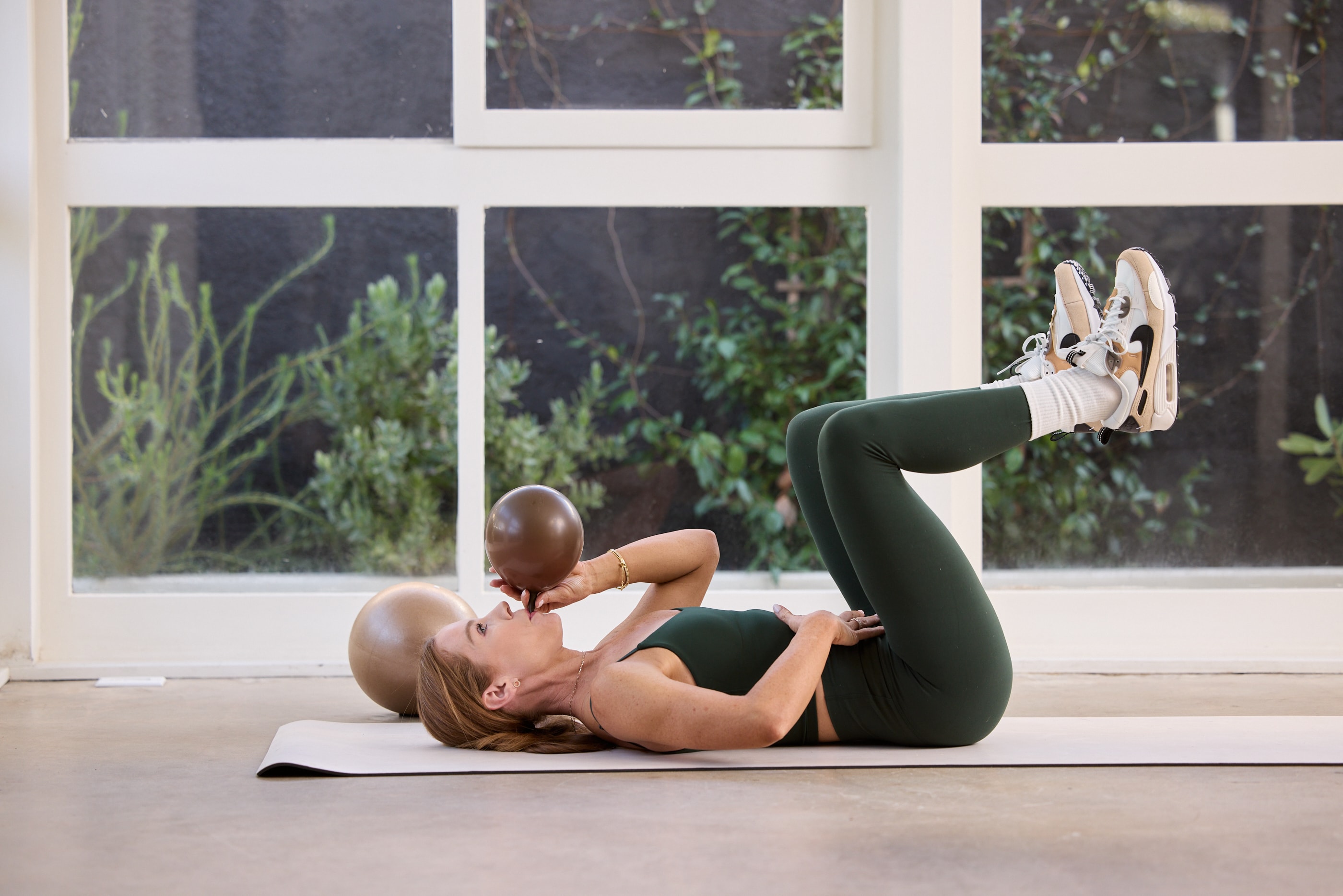
Step 1: Find Neutral Alignment
Lie on your back with your knees bent. Align your ribs over your pelvis and keep a small, natural curve in your lower back.
This position allows your diaphragm, core, and pelvic floor to communicate efficiently.
Step 2: Inhale to Expand
Breathe in through your nose and visualize your ribs expanding outward and your belly gently rising. Feel the air fill your entire torso: front, sides, and back.
Your pelvic floor should lengthen slightly during the inhale.
Step 3: Exhale to Engage
As you exhale through pursed lips, feel your ribs draw in and your deep core gently engage. Imagine zipping your abs from pubic bone to sternum. Allow your pelvic floor to lift slightly with the exhale.
This is functional bracing, your breath, core, and pelvic floor working together to stabilize naturally.
Step 4: Coordinate with Movement
Take this into your workouts:
- Inhale before you lower into a movement (like a squat).
- Exhale and engage as you lift or exert force.
This ensures you’re managing pressure correctly instead of holding your breath or bearing down.
When you return to heavier lifting, this coordination becomes the foundation for safe bracing under load.
What Happens When You Get It Right
When breathing and bracing are properly integrated, you’ll notice:
- A flatter, more functional core
- Improved lifting performance
- Better posture and balance
- Less pelvic pressure or leaking
- Greater strength without strain
You’ll also find that daily movements, lifting your baby, carrying groceries, standing tall, feel easier and more supported.
%20copy.png)
Common Mistakes to Avoid
- Holding your breath too long. This can increase pressure downward.
- Over-bracing the abs. Gripping your stomach too tightly limits diaphragm and pelvic floor movement and promotes suboptimal motor skills.
- Ignoring the exhale. The exhale is when your core stabilizes most effectively.
- Skipping progression. Start light and controlled before adding heavy loads.
Research Supporting Pressure Management Training
- A 2022 study in Physiotherapy Theory and Practice found that coordinated diaphragmatic breathing improved core muscle activation and reduced abdominal separation in postpartum women.
- Research in the Journal of Women’s Health Physical Therapy showed that teaching exhalation-based bracing improved pelvic floor control and reduced urinary leakage during exercise.
These studies confirm that restoring breath and pressure management is a crucial step in regaining strength safely after pregnancy.

Breathing and C-Section Recovery
If you had a C-section, your breathing mechanics may feel restricted due to fascial tension and scar adhesions. This can affect how your diaphragm moves and how efficiently you brace.
In C-Section Recovery, we combine gentle scar mobilization, lymphatic drainage, and specific c-section focused diaphragmatic breathing techniques to release those restrictions and reestablish a balanced core system.
If you’re working hard but still feeling pressure, doming, or fatigue during workouts, start with your breath and pressure management.
Inside Ab Rehab, we’ll teach you how to breathe, brace, and rebuild safely so your core works with you again. For surgical births, C-Section Recovery adds the missing link of scar and fascia restoration to unlock your full range of motion and stability.
True strength isn’t about gripping harder, it’s about managing pressure smarter.

Find your
perfect plan


