
Why Traditional Workouts Don’t Work After Pregnancy and How Ab Rehab Fixes the Problem
.png)
If you have tried returning to workouts after pregnancy and felt frustrated, stuck, or disconnected from your body, you are not alone.
Many women do everything they think they are supposed to do. They go back to strength training, start doing ab exercises, add cardio, or even jump into high intensity workouts. Yet months or even years later, they are still dealing with a lower belly that will not flatten, lingering diastasis recti, pelvic floor symptoms, or a core that never quite feels strong or stable.
The issue is not effort or discipline.
It is that traditional workouts do not account for what pregnancy actually changes in the body or what needs to be rebuilt first.
This gap is exactly why Ab Rehab exists.
What Pregnancy Changes That Traditional Workouts Ignore
Pregnancy does far more than stretch muscles or change body composition. It alters how the entire core system functions.
As the body adapts to support a growing baby, breathing mechanics shift, posture changes, and the relationship between the rib cage and pelvis is altered. The deep core system, which includes the diaphragm, transversus abdominis, pelvic floor, and deep spinal stabilizers, adapts to manage pressure differently.
These changes are necessary during pregnancy. The problem is that they do not automatically reset after birth.
Without intentional retraining, many postpartum bodies are left with a core system that is poorly coordinated. Some muscles become overactive and take on more work than they should, while others struggle to engage at the right time. Pressure is often no longer managed efficiently during movement, which directly affects how the body responds to exercise.
Traditional workouts assume this system is already functioning well. For many postpartum women, that assumption simply is not true.
This is why so many women feel like workouts used to work, but no longer do.
.png)
3 Reasons Why Traditional Workouts Don’t Work After Pregnancy
1. Loading the Core Before It Is Ready
Most traditional ab workouts emphasize global muscles like the rectus abdominis before deep stabilizers are functioning properly. Exercises such as crunches, sit ups, leg lowers, and long plank holds require the body to manage pressure well.
When the deep core system has not been retrained, the body compensates. The upper abs tend to grip, pressure pushes outward rather than being controlled, and the lower belly remains distended. The pelvic floor often absorbs more load than it should, which can worsen symptoms rather than resolve them.
Doing more repetitions or harder variations does not fix this problem. It simply reinforces the same faulty pattern.
This is why Ab Rehab does not start with traditional ab exercises. It starts with restoring coordination and control so that later core work actually works.
If you are noticing that traditional ab workouts make your symptoms worse or lead to no visible progress, this is a strong sign that foundational retraining is missing. Ab Rehab is designed to address this exact issue.
2. Strength Training Without a Foundation Reinforces Compensation
Strength training is not the enemy postpartum. In fact, it is an essential part of long term recovery and resilience.
The issue is timing.
Compound movements like squats, deadlifts, lunges, presses, and pulls all require the core to manage pressure efficiently. When foundational coordination is missing, the body often responds by bracing excessively, flaring the rib cage, or shifting load away from the deep core.
Many women feel strong during these movements, yet still struggle with their midsection or pelvic floor. Strength is being built, but not through the system that needs it most.
Ab Rehab intentionally layers strength back in only after motor skills and pressure management are restored. This allows strength training to reinforce proper patterns instead of compensations.
3. Cardio and HIIT Increase Symptoms Instead of Resolving Them
Cardio and high intensity workouts dramatically increase intra abdominal pressure. Without proper pressure management, this can lead to leaking, pelvic heaviness, core instability, or a sense that recovery has stalled.
This does not mean cardio is bad or off limits forever. It means that the body needs the capacity to manage pressure before intensity is added.
Inside Ab Rehab, cardio is introduced progressively in later phases once the core system can handle it. When done at the right time, cardio supports recovery rather than undermines it.
What Actually Works After Pregnancy: The Ab Rehab Approach
The solution is not avoiding workouts long term. It is rebuilding the foundation first and then layering strength and intensity intentionally.
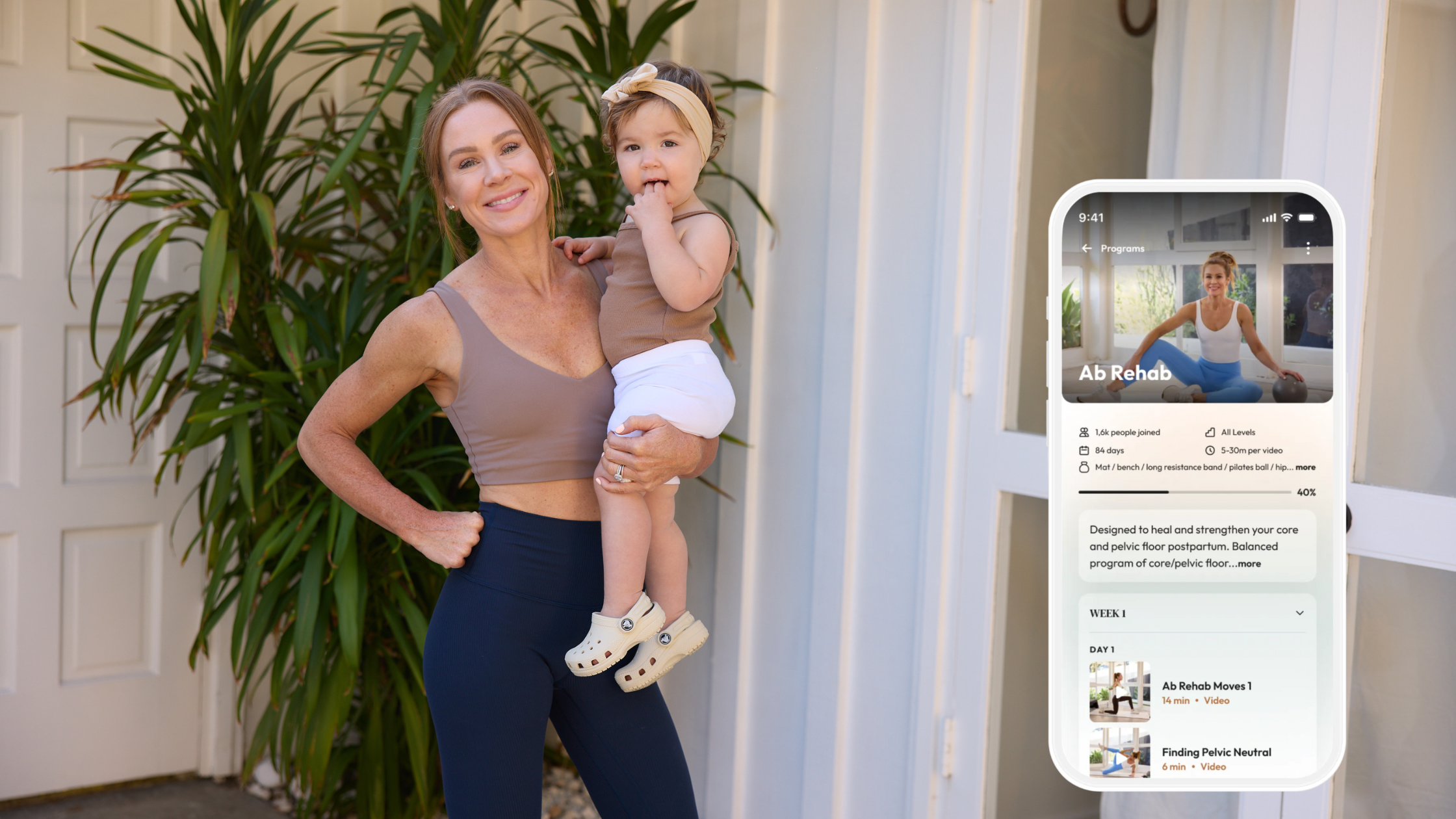
Ab Rehab is structured in 4 phases to mirror how the body actually adapts.
.png)
Phase 1: Restoring Motor Skills and Foundation Postpartum
Phase 1 focuses on retraining the basics that traditional workouts skip. This includes breathing mechanics, pressure management, deep core and pelvic floor coordination, posture, and rib pelvis alignment.
This phase moves slower by design. Coordination must come before load.
Many women notice improvements quickly in how their core feels, how their posture changes, and how much more connected they feel during daily movement. Pelvic floor symptoms often begin to calm, and the lower belly starts responding becomes easier to control.
This phase sets the stage for everything that follows.
If you feel like your body never fully recovered after pregnancy, Phase 1 of Ab Rehab is where meaningful change begins.
Phase 2: Strength Integration With Control
Once foundational motor skills are restored, Ab Rehab begins layering strength back in.
Phase 2 introduces controlled strength work that challenges the body without overwhelming the system. Core engagement is practiced under load, not through bracing, but through coordination.
This is where many women start to feel strong again without tension or compensation. Strength finally supports recovery instead of fighting it.
Phase 3: Cardio and Dynamic Movement
By Phase 3, the body is ready for more dynamic challenges.
Cardio and movement variability are added intentionally, with a focus on managing pressure under fatigue. This phase builds resilience for real life demands, not just workouts.
Movement begins to feel fluid again. Cardio no longer triggers symptoms. Confidence starts to return.
Phase 4: Full Integration and Performance
Phase 4 brings everything together. Core control, strength, cardio, and endurance are fully integrated.
At this stage, the deep core system functions as a system rather than isolated muscles. Many women feel ready to return to traditional workouts or explore new fitness goals without fear of setbacks.
.png)
When Can You Return to Traditional Workouts After Pregnancy?
There is no universal timeline, but there is a universal requirement.
Traditional workouts work best after motor skills, pressure management, and deep core coordination have been restored.
For many women, this happens during or after completing Ab Rehab, particularly once they have progressed through the later phases. At that point, strength training feels productive, cardio feels supportive, and progress finally sticks.
What Comes After Ab Rehab?
Once Ab Rehab is complete, many women want to continue building strength and conditioning in a way that supports their recovery.
LIFT: Low Impact Functional Strength
LIFT is a natural next step for women who want to focus on full body strength without high impact. It reinforces proper movement patterns, respects pelvic floor loading, and allows for progressive overload without unnecessary stress.
For many postpartum women, LIFT becomes a sustainable way to stay strong while maintaining the foundation built in Ab Rehab.
BOD Squad: Conditioning and Intensity
BOD Squad is appropriate once pressure management holds up under fatigue and symptoms are resolved.
This program adds higher intensity conditioning while still honoring form, coordination, and recovery. When introduced at the right time, it enhances fitness rather than undoing progress.
The Bottom Line About Postpartum Workouts:
Traditional workouts do not fail postpartum because they are bad. They fail because the foundation was skipped.
Ab Rehab exists to rebuild that foundation so that strength, cardio, and intensity actually work again. When the body is retrained in the right order, results feel sustainable instead of temporary.
You do not need more workouts.
You need the right sequence.
Restore function first.
Build strength second.
Add intensity when the body is ready.
That is how postpartum recovery actually works and why Ab Rehab is designed the way it is!
Find your
perfect plan


